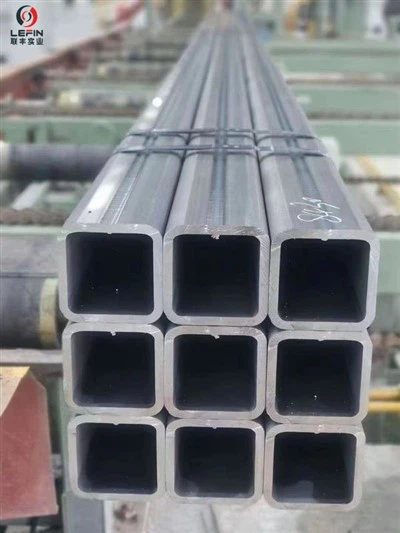
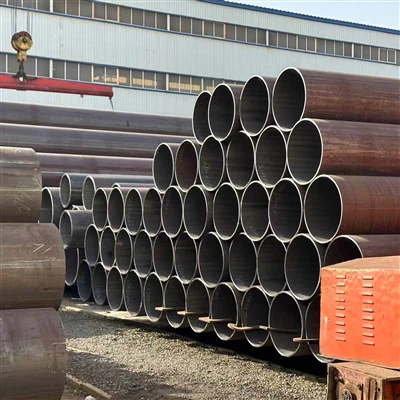
Hot rolled square and rectangular tubes Vs. Cold rolled square and rectangular tubes
Hot rolled square and rectangular pipes are made by heating the steel to high temperatures and then rolling it through molds to shape it into the desired form. This process produces pipes with rougher surfaces and larger tolerances, but it also results in stronger and more durable pipes that are ideal for demanding applications.
In contrast, cold rolled square and rectangular pipes are made by rolling the steel at room temperature, which results in a smoother and more precise surface. This process tends to produce pipes with tighter tolerances, which makes them well-suited for applications that require accurate measurements and precise fittings.
LEFIN STEEL produce the hot rolled square and rectangular hollow section with the following items:
Advantages of the Hot rolled square and rectangular hollow section:
1. The production process of hot-rolled rectangular hollow pipes reduces one pickling process, reheating process, consumption, and cost compared to cold drawn or cold-rolled welded rectangular pipes.
2. Hot rolled rectangular hollow pipes are energy-saving and environmentally friendly new products. Their mechanical properties, lamination, and tensile strength are better than those of welded, cold drawn, and cold-rolled rectangular pipes.
3. Under natural conditions, the temperature gradually decreases from hot rolling to cooling, and the internal stress is very small. However, during cold drawing, the internal structure of cold rolled square tube is deformed again after cold rolling and cold drawing, which increases the internal stress. Its yield point and tensile strength are not as good as those of hot rolled square tube
4. Hot rolled rectangular tubes have been widely used in fields such as construction machinery, transportation machinery, agricultural machinery, and petroleum machinery
Advantages of Cold rolled square and rectangular tubes
1. High-quality finish: Cold rolled tubes have a smoother surface finish compared to their hot rolled counterparts. This makes them more aesthetically appealing and easier to clean.
2. Accurate dimensions: The cold rolling process allows for precise dimensional control, resulting in consistent and accurate tube shapes and sizes.
3. Better strength: Cold-rolled tubes have higher strength and durability due to the strain-hardening process during manufacturing. Cold rolling also increases the yield strength of the material, making it more resistant to bending and deformation.
4. Improved versatility: Cold rolled square and rectangular tubes can be easily cut, welded, and formed, making them suitable for a wide range of applications and industries.
5. Cost-effective: Cold rolled tubes are cost-effective since they require less energy during production and have higher yield strengths, reducing the amount of material needed for a given project.


Both types of pipes have their advantages and disadvantages, and the choice between them ultimately depends on the specific needs of the application. However, despite their differences, both hot rolled and cold rolled square and rectangular pipes are essential parts of modern infrastructure and play a vital role in maintaining the world's transportation, housing, and energy systems.