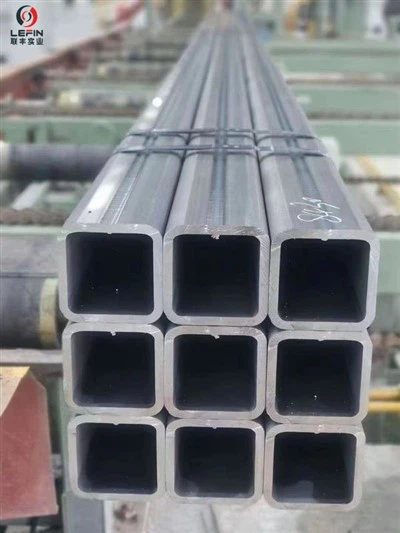
Both EN 39 and BS 1139 are standards related to scaffolding tubes and couplers, but they originate from different regulatory bodies and have distinct specifications. Below is a detailed comparison of the two standards.
Origin and Scope
EN 39:
- A European standard (EN) that specifies requirements for steel tubes used in scaffolding.
- Developed by CEN (European Committee for Standardization).
- Applies across EU member states and other countries adopting EN standards.
BS 1139:
- A British standard (BS) that covers scaffolding tubes and couplers.
- Part of the BS 1139 series, which includes:
- BS 1139-1: Metal scaffolding tubes
- BS 1139-2: Couplers and fittings
- Primarily used in the UK and Commonwealth countries.

Material and Dimensional Specifications
EN 39 Scaffolding Tubes
- Material:
Made from non-alloy steel tubes (typically S235 or S355 grade).
Must comply with EN 10219-1/2 (cold-formed welded steel tubes).
- Dimensions:
Nominal diameter: 48.3 mm (standard).
Wall thickness: Typically 3.2 mm or 4.0 mm.
Tolerances: Strictly defined in EN 39 (e.g., diameter tolerance ±0.5 mm).
- Surface Treatment:
Usually hot-dip galvanized for corrosion resistance.
BS 1139 Scaffolding Tubes
- Material:
Traditionally made from mild steel (similar to EN 39 but with older specifications).
Some variations allow for higher-strength steel.
- Dimensions:
Nominal diameter: 48.3 mm (same as EN 39).
Wall thickness: Historically 4.0 mm (but can vary).
Tolerances: Slightly looser than EN 39 in older versions.
- Surface Treatment:
Often hot-dip galvanized, but older tubes may be painted or untreated.

Compatibility and Modern Usage
- EN 39 has largely replaced BS 1139 in Europe due to harmonization under EU regulations.
- BS 1139 is still referenced in the UK, but many manufacturers now comply with EN 39 and EN 74 for international markets.
- Tubes and couplers from both standards are often interchangeable in practice, but structural engineers may prefer EN standards for higher reliability.
Summary of Key Differences
| Aspect | EN 39 | BS 1139 |
|---|---|---|
| Standard Type | European (EN) | British (BS) |
| Scope | Scaffolding tubes only | Tubes (BS 1139-1) and couplers (BS 1139-2) |
| Material Grade | S235/S355 steel | Mild steel (older versions) |
| Wall Thickness | 3.2 mm / 4.0 mm | Traditionally 4.0 mm |
| Coupler Standard | EN 74 | BS 1139-2 |
| Current Usage | Dominant in EU, widely adopted | Still used in UK but being phased out |
Conclusion
Both EN39 and BS1139 are important standards for ensuring the safety and reliability of scaffolding systems. The choice between them depends on the specific requirements of the project, including geographical location, material preferences, and budget constraints. For projects in the European Union, EN39 is often the preferred standard, while BS1139 is more commonly used in international projects and regions that follow British standards.