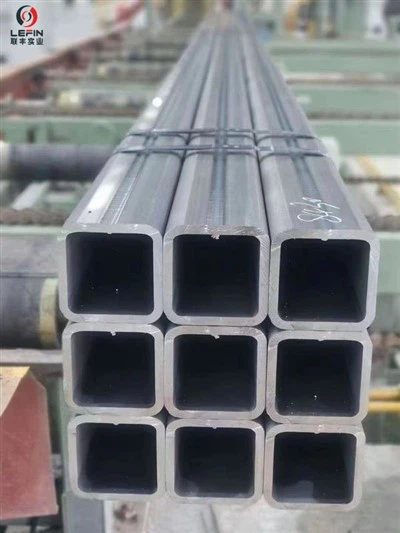
The differences between API 5L X42 PSL1 and API 5L X52 PSL1 can be delineated in terms of chemical composition, physical properties, and applications.
Chemical composition
| Chemical Composition | ||
| ≤25mm SMLS | API 5L X42 PSL1 | API 5L X52 PSL1 |
| Carbon (C) max | 0.28% | 0.28% |
| Manganese (Mn) max | 1.30% | 1.40% |
| Phosphorus (P) max | 0.03% | 0.03% |
| Sulfur (S) max | 0.03% | 0.03% |
| Vanadium (V) + Niobium (Nb) + Titanium (Ti) | 0.15% | 0.15% |
| Chemical Composition | ||
| ≤25mm OTHERS | API 5L X42 PSL1 | API 5L X52 PSL1 |
| Carbon (C) max | 0.26% | 0.26% |
| Manganese (Mn) max | 1.30% | 1.40% |
| Phosphorus (P) max | 0.03% | 0.03% |
| Sulfur (S) max | 0.03% | 0.03% |
| Vanadium (V) + Niobium (Nb) + Titanium (Ti) | 0.15% | 0.15% |
The higher Mn content in X52 indicates a potential for greater strength and hardness.
Physical Properties
| Physical Properties | ||
| API 5L X42 PSL1 | API 5L X52 PSL1 | |
| yield strength | 290MPa(42100psi) | 360MPa(52200psi) |
| tensile strength | 415MPa(60200psi) | 460MPa(66700psi) |
| elongation(50mm 2inch) | 28.00% | 21.00% |
- X52 PSL1, is designed to withstand greater stress and is more suitable for applications requiring higher pressure ratings.
- X42 PSL1, with its lower strength but higher ductility, may be used in applications where flexibility and formability are more critical than extreme strength.
Applications
Both grades are used in the transportation of petroleum and natural gas.
- API 5L X52 PSL1, with its higher strength and pressure ratings, is used in more demanding applications, including high-pressure oil and gas pipelines and other situations where greater structural integrity is needed.
- API 5L X42 PSL1, with its lower strength but higher ductility, may be used in applications where flexibility and formability are more critical than extreme strength.
Surface Treatment
The surface treatment requirements for API 5L X42 PSL1 and API 5L X52 PSL1 can vary based on the intended use and environmental conditions.
Both grades can undergo treatments such as:
- Mill Scale (As-rolled): This is the natural surface condition after hot rolling, which is common for PSL1 pipes .
- Varnish Coating: A protective coating applied to prevent corrosion during storage and transportation.
- Painting: Black paint is often used for additional corrosion protection.
- Fusion Bonded Epoxy (FBE): A common coating for corrosion protection in pipelines, providing a robust barrier against moisture and chemicals.
- 3-Layer Polyethylene (3LPE) or 3-Layer Polypropylene (3PP): These coatings are used for external corrosion protection, especially in harsh environments .
Differences in Surface Treatment:
While both grades can receive similar surface treatments, the choice of treatment may differ based on the specific requirements of the application. For instance, higher strength grades like X52 might be more likely to receive additional or more robust surface treatments to ensure longevity in high-stress environments, such as in deep-sea or high-pressure pipelines .