Testing the load - bearing capacity of a scaffolding plank is crucial for ensuring the safety of construction sites and the workers who rely on them. As a scaffolding plank supplier, I've seen firsthand the importance of accurate load - testing. It's not just a matter of compliance; it's about saving lives and preventing costly accidents.
Why Load - Testing is Vital
Before we dive into how to test, let's understand why load - testing is so important. Scaffolding planks are used in a variety of construction and maintenance projects. They need to support the weight of workers, tools, and materials. If a plank fails under load, it can lead to falls, injuries, and even fatalities. Load - testing helps to identify any weak or defective planks before they are put into use, ensuring that only safe materials are used on the job site.
Types of Scaffolding Planks
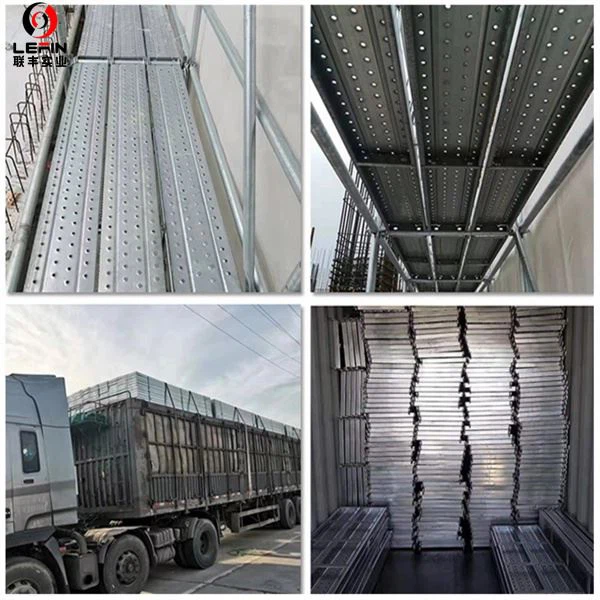
There are several types of scaffolding planks available in the market. As a supplier, I offer a range of options, including the Vietnam Scaffolding Steel Board 250mm, Steel Plank, and Pre Galvanized Steel Plank. Each type has its own characteristics and load - bearing capacities. For instance, steel planks are known for their durability and high load - bearing capacity, while pre - galvanized steel planks offer additional corrosion resistance.
Pre - Test Inspection
Before starting the load - test, it's essential to conduct a pre - test inspection. This involves a visual check of the plank for any visible signs of damage, such as cracks, warping, or excessive wear. You should also look for any signs of corrosion, especially if you're dealing with steel planks. If the plank shows any signs of damage, it should be removed from service and not tested.
Measure the dimensions of the plank accurately. The length, width, and thickness can all affect its load - bearing capacity. Any deviation from the standard dimensions can indicate a potential issue. You can use a measuring tape or a caliper for this purpose.
Setting Up the Test
Choose a suitable testing area that is flat and stable. The area should be large enough to accommodate the entire length of the plank and any loading equipment. Make sure the area is free from any obstructions that could interfere with the test.
Support the plank as it would be supported in a real - world scenario. For most scaffolding planks, this means using two supports placed at a specific distance apart. The distance between the supports is determined by the type of plank and the intended use. Refer to the manufacturer's specifications for the correct support spacing.
Applying the Load
There are two main methods for applying load to a scaffolding plank: static loading and dynamic loading.

Static Loading
Static loading is the most common method used for testing scaffolding planks. In this method, a known weight is gradually applied to the center of the plank. You can use sandbags, weights, or hydraulic jacks to apply the load. Start by applying a small load and gradually increase it until the plank reaches its maximum design load.
During the loading process, monitor the deflection of the plank. Deflection is the amount the plank bends under load. Use a dial indicator or a laser displacement sensor to measure the deflection. Keep a record of the load applied and the corresponding deflection. Compare the results with the manufacturer's specifications. If the deflection exceeds the recommended limit, the plank may not be suitable for use.
Dynamic Loading
Dynamic loading involves applying a load that varies over time. This type of testing is more complex and is usually used to simulate real - world conditions, such as the movement of workers or the dropping of tools on the plank. Dynamic loading can be achieved using a mechanical shaker or a hydraulic actuator.
Dynamic testing requires specialized equipment and expertise. It's typically conducted in a laboratory setting. However, if you suspect that the plank will be subjected to dynamic loads in its intended use, it's important to consider dynamic testing.
Post - Test Analysis
After the load - test is complete, unload the plank gradually. Inspect the plank again for any signs of damage that may have occurred during the test, such as new cracks or excessive deformation. If the plank shows any signs of damage, it should not be used on a construction site.
Record the test results in a detailed report. Include information such as the type of plank, its dimensions, the load applied, the maximum deflection, and the overall condition of the plank after the test. This report can be used for quality control, compliance, and future reference.
Standards and Regulations
There are several standards and regulations that govern the load - testing of scaffolding planks. In the United States, the Occupational Safety and Health Administration (OSHA) has specific requirements for scaffolding safety, including load - testing. These standards ensure that scaffolding planks meet minimum safety requirements.
It's important to stay up - to - date with these regulations and ensure that your testing procedures comply with them. Non - compliance can result in fines, legal issues, and most importantly, safety risks.
Conclusion
Testing the load - bearing capacity of a scaffolding plank is a critical step in ensuring construction safety. As a supplier, I'm committed to providing high - quality scaffolding planks that have been thoroughly tested. If you're in the market for reliable scaffolding planks, including the Vietnam Scaffolding Steel Board 250mm, Steel Plank, or Pre Galvanized Steel Plank, I invite you to reach out to discuss your procurement needs. We can work together to ensure that you get the right products for your projects and that they meet all necessary safety standards.
References
- Occupational Safety and Health Administration (OSHA). Scaffolding standards.
- Manufacturer's specifications for scaffolding planks.