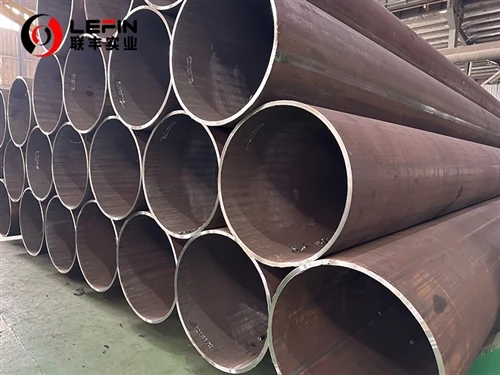
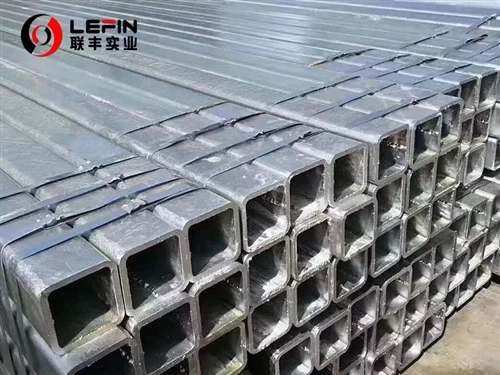
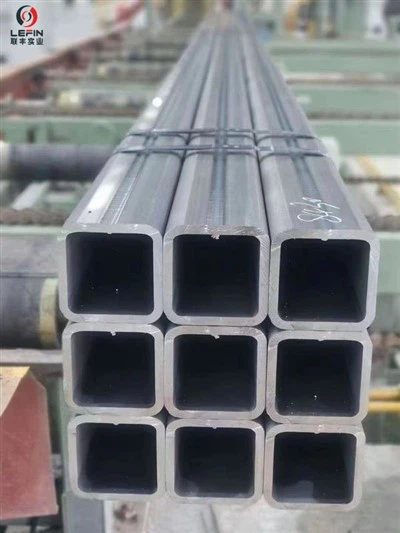
Standard Scope
GB/T 8163 defines the requirements for hot-rolled or cold-drawn seamless carbon and alloy steel pipes intended for pressure piping systems. Its core philosophy is absolute safety in pressure containment. Every aspect of production, from steelmaking to final inspection, is geared toward preventing failure under internal stress, making it fundamentally different from structural standards like GB/T 8162.
Primary Applications & Industries
This standard is indispensable in industries where piping forms the circulatory system for critical processes:
- Power Generation: Boiler tubes, superheater and reheater coils, and high-pressure steam lines in thermal power plants.
- Petrochemical & Oil & Gas: Process piping, refinery pipelines, and transmission lines for hydrocarbons, chemicals, and feedstocks.
- Boiler Manufacturing: Key material for water-wall tubes, economizers, and other pressure parts in industrial and utility boilers.
- Heat Exchanger & Condenser Tubes: Where tubes must withstand internal pressure and often external corrosion.
- General High-Pressure Service: Any plant piping system designed to operate under significant pressure.
Common Steel Grades & Material Properties
Grade selection depends on service pressure, temperature, and corrosion environment. The most widely supplied grades include:
- Carbon Steels:
20# Steel: The workhorse grade for general fluid service at low to medium temperatures. Offers an excellent balance of strength, weldability, and cost.
- Low-Alloy Steels:
Q355 (Similar to ASTM A53/API 5L Gr. B): Provides higher yield strength for more demanding pressure applications or to allow for thinner walls.
Alloy Grades (e.g., 15CrMoG, 12Cr1MoVG): Specified for high-temperature service (e.g., boiler superheaters). These chromium-molybdenum steels offer enhanced creep strength and oxidation resistance.
Key Manufacturing & Mandatory Testing Requirements
Compliance with GB/T 8163 is defined by its stringent validation process. Key requirements include:
- Hydrostatic Test: This is a mandatory, non-negotiable test. Every pipe must be tested to a specified pressure (calculated from a formula involving steel grade, wall thickness, and diameter) for a minimum duration with no leakage or permanent deformation.
- Non-Destructive Testing (NDT): Entire pipe bodies must undergo inspection to detect hidden defects. Common methods include:
- Ultrasonic Testing (UT): Detects internal and subsurface imperfections.
- Eddy Current Testing (ET): Effective for detecting surface and near-surface flaws.
- Mechanical and Chemical Tests: Comprehensive tensile tests, hardness tests, and chemical analysis are performed per batch to ensure material properties meet the specified grade.
- Strict Dimensional & Quality Control: Tolerances for OD, WT, and straightness are tightly controlled to ensure fit-up in critical piping systems.
Procurement & Selection Guideline
Selecting the correct GB/T 8163 product is a safety-critical process:
- Confirm the Application is for Pressure: This standard is only for pressurized fluid systems.
- Define Service Conditions: Determine the operating pressure, temperature, and fluid type (especially corrosiveness) to select the appropriate steel grade (e.g., 20# for ambient steam, 15CrMoG for high-temperature steam).
- Specify Testing Requirements: While hydro and NDT are standard, clarify if additional tests (e.g., Charpy impact test for low-temperature service) are needed.
- Demand Complete Certification: The Mill Test Certificate (MTC) is your proof of compliance. It must include hydrostatic test pressure, NDT method (e.g., UT), and full chemical/mechanical results.
Q&A
Q1: What is the single most important difference between GB/T 8163 and GB/T 8162?
A: The mandatory hydrostatic pressure test and full-body NDT inspection required by GB/T 8163. GB/T 8162 pipes do not undergo these pressure integrity checks. They are not interchangeable.
Q2: Can we use a higher-grade material from GB/T 8162 (like Q355) as a pressure pipe?
A: No. The grade is only one factor. A pipe must be manufactured, tested, and certified to the pressure pipe standard (GB/T 8163) to be considered safe for pressure service, regardless of its inherent material strength.
Q3: How does GB/T 8163 relate to international standards like ASTM A106?
A: GB/T 8163 is the direct Chinese national equivalent to ASTM A106 for carbon steel pressure pipes. Grade 20# under GB/T 8163 is generally considered functionally equivalent to ASTM A106 Grade B and is widely accepted in global projects.
Q4: Are all GB/T 8163 pipes suitable for high-temperature service?
A: No. Standard carbon steel grades (20#, Q355) are for low/medium temperatures. For sustained high-temperature service (e.g., above 450°C), specific alloy steel grades like 15CrMoG, which are part of the GB/T 8163 scope, must be specified.
Conclusion
GB/T 8163 is not merely a product specification; it is a safety assurance for any pressurized fluid system. Its rigorous framework ensures that every meter of pipe delivers reliable performance under stress.
At LEFIN STEEL, we are experts in pressure piping. We provide GB/T 8163 seamless pipes with full traceability, mandatory testing, and certification. From common 20# to specialized alloy grades, we provide the certified material integrity your critical projects demand.
Contact us for technically compliant GB/T 8163 seamless pipes. Let us be your trusted partner in building safe and efficient pressure systems.