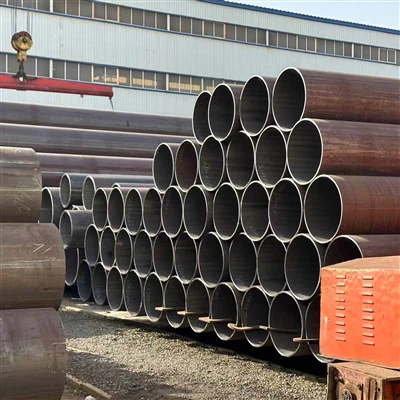
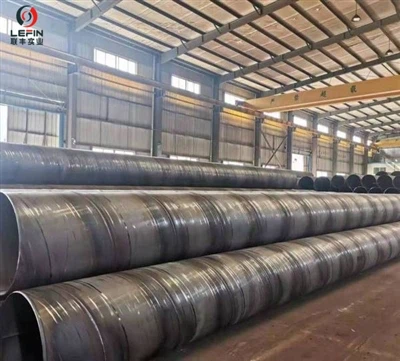
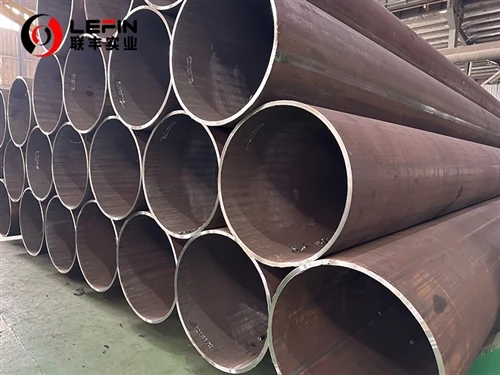
If you specify or buy coated steel pipes for oil & gas, long-distance water transmission, or chemical lines, you've probably seen these acronyms a thousand times: FBE, 2FBE, 2PE, 3PE, 3PP, TPEP. They all claim to stop corrosion. But which one actually fits your project's soil, temperature, handling, and budget?
I've been on the coating line for 15+ years. Let me walk you through each system – how they're made, where they shine, and where they don't. No hype, just what works in the real world.
FBE – Single Layer
A thermosetting epoxy powder that melts and cures into a thin, hard film.
Process (short version):
Blast to SA 2.5 → heat to 230–250°C → electrostatic spray → cure 30–60 sec → water quench.
Thickness: 250–400 µm.
Best for: Buried gas lines, desalination plants, small diameters (<150 mm), pipelines with CP.
Limit: Can't take heavy rock impacts.
2FBE – Double Layer FBE
Two epoxy layers in one go: a standard primer + a tougher topcoat.
How it's different: Second powder applied before the first cures. Total thickness 600–1000 µm.
When to choose 2FBE: Rocky backfill, small diameters (too small for 3PE extrusion), or service temp up to 120°C (3PE only goes to 80°C).
Cost: Midway between FBE and 3PE.
2PE & 2PP – Old Two‑Layer Systems
Adhesive + polyolefin, no epoxy primer. Process: blast, heat, extrude adhesive, extrude PE/PP, cool.
Why still around: Lower cost, faster line speed.
Why we rarely recommend: Adhesive bond degrades over time with moisture and CP → disbondment. Most codes (ISO 21809‑1, CSA Z245.20) have moved away.
Our advice: Skip for any critical line.
3PE – The Industry Workhorse
Three layers: FBE primer (150–300 µm) + copolymer adhesive (150–300 µm) + polyethylene outer (1.5–3.5 mm).
Key manufacturing step: Extrude adhesive and PE while the FBE is still reactive – that's how they bond chemically.
Why 3PE dominates:
High impact resistance (>5 J/mm)
Excellent cathodic disbondment (<8 mm @ 65°C/28d)
Low moisture pickup
Proven for decades
Temp limit: 80°C continuous.
Applications: Long‑distance oil/gas/water, large diameters, rocky or wet soils.
3PP – For High Temperature
Same three layers, but outer is polypropylene instead of polyethylene.
Property: Continuous service to 110–120°C. Also stiffer and more abrasion‑resistant.
When needed: Hot oil pipelines, low‑pressure steam, desert lines (high ambient temps).
Tradeoff: More expensive and trickier to process. Don't use it for ambient lines – over‑specifying wastes money.
TPEP – Hybrid for Water Pipelines
Internal FBE + external 3PE (or modified PE).
Structure:
Inside: FBE 300–500 µm – smooth, potable‑water approved
Outside: 3PE 1.5–2.5 mm – mechanical & corrosion protection
How made: Sequential (inside first, then outside) or simultaneous.
Why growing: No field‑applied internal lining needed. Very popular for large‑diameter water mains.
Watch out: Internal pinholes are hard to repair – insist on 100% holiday testing inside.
Quick Comparison Table
| Coating | Thickness | Impact | Max Temp | Cathodic Disbondment (28d/65°C) | Cost |
|---|---|---|---|---|---|
| Single FBE | 250–400 µm | Moderate | 120°C | <5 mm | Low |
| 2FBE | 600–1000 µm | High | 120°C | <5 mm | Med‑low |
| 2PE | 1.5–2.5 mm | Medium | 70°C | >15 mm (poor) | Low |
| 3PE | 1.8–3.5 mm | Very high | 80°C | <8 mm | Med‑high |
| 3PP | 1.8–3.5 mm | Very high | 110°C | <8 mm | High |
| TPEP | inside 300–500 µm + outside 1.5–2.5 mm | (external same as 3PE) | 80°C (external) | <8 mm | High |
(Based on ISO 21809‑1 compliant coatings)
How to Choose – Four Questions
- Max temperature?
≤80°C → 3PE or 2FBE
80–110°C → 3PP
110°C → FBE alone
- Backfill condition?
Sand/clay → Single FBE maybe enough
Mixed gravel → 2FBE or 3PE/3PP
Sharp rock → 3PE/3PP with thick outer (≥2.5 mm)
- Water pipeline needing internal smoothness?
Yes → TPEP (or internal liquid epoxy)
No → any external coating
- CP and soil aggressiveness?
Aggressive (low resistivity) → FBE or 3PE/3PP – avoid 2PE
- Rule of thumb:
Small dia (<150 mm) + high temp → 2FBE
Large dia + ambient + rocky → 3PE
High temp (90–110°C) → 3PP
Large‑dia potable water → TPEP
Common Field Failures & Prevention
| Failure | Cause | Prevention |
|---|---|---|
| Disbondment at cutback | Poor surface prep at ends | Clean cutback, use compatible field joint material |
| FBE holidays | Contamination or powder issue | 100% spark test (5–10 kV/100 µm), repair with liquid epoxy |
| 3PE adhesive failure | Extruded too late – FBE already cured | Keep time from spray to extrusion <15 sec |
| Chipping during handling | Steel hooks or pipe‑to‑pipe impact | Rubber‑padded slings, careful laydown |
Key Standards
| Standard | Covers |
|---|---|
| ISO 21809‑1 | 3PE, 3PP, FBE for oil & gas |
| DIN 30670 | 3PE, 2PE (Europe) |
| DIN 30678 | 3PP (Europe) |
| CSA Z245.20 | Canadian (FBE, 2FBE, 3PE, 3PP) |
| AWWA C213 / C222 | FBE / 3PE for water pipe |
Always ask for MPS (Manufacturing Procedure Specification) and PQR (Procedure Qualification Record).
Bottom Line
Most buried pipelines → 3PE is the safest bet
High temperature (up to 110°C) → 3PP
Small diameters / high temp → 2FBE
Large water mains → TPEP
Avoid 2PE/2PP for critical lines
At LEFIN STEEL, we run all these systems on diameters 20–2500 mm. If you need help drawing up a coating specification or want to see our test data, give me a call. I'm happy to walk you through it – no sales pitch, just what works.
Next in this series: Liquid Paint Linings & Pre‑Insulated Pipes