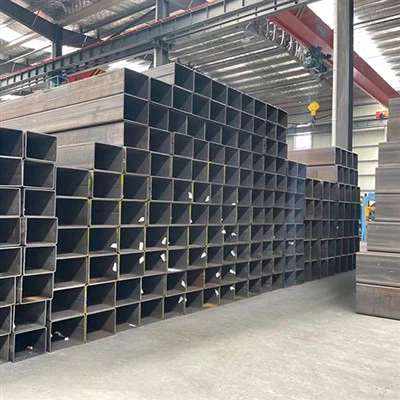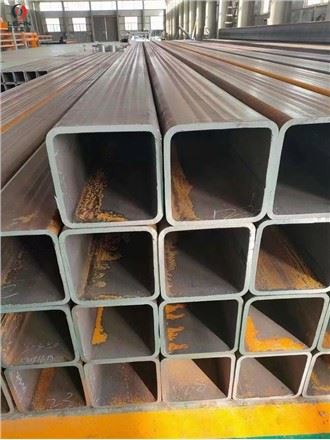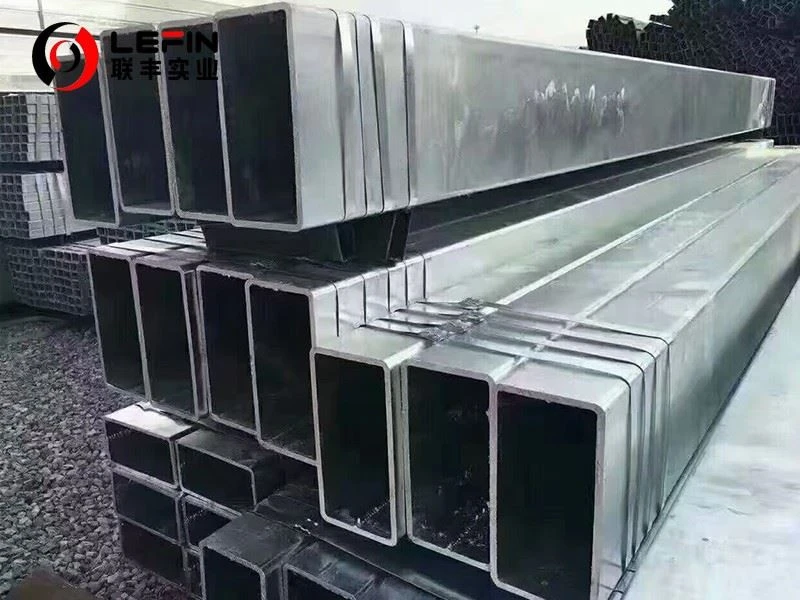
Tianjin Lefin Industrial Co., Ltd is one of the most experienced manufacturers and suppliers of galvanized metal in China. Please feel free to buy high quality galvanized metal from our factory. Good service and reasonable price are available.
Detailed Explanation of Galvanized Metal Knowledge
Galvanized metal refers to hot-dip galvanized/electro-galvanized steel, which is a type of steel with a zinc coating on its surface for corrosion protection. It is widely used in industries, construction, piping, and hardware, and is discussed in six main sections: basic classification, process, performance, application, common defects, and industry standards. This covers both export, engineering, and material practical operations.
I. Core Definition and Corrosion Prevention Principles
Galvanization = Applying a metallic zinc layer on the surface of carbon steel/iron-based materials, utilizing two major corrosion prevention mechanisms:
- 1. Physical isolation: The zinc layer covers the substrate, isolating it from air, moisture, and corrosive media;
2. Sacrificial anode protection (cathodic protection): Zinc has a higher metal activity than iron. When the coating is damaged, zinc is corroded first, protecting the internal steel from rusting.
Additional note: Zinc itself forms a dense basic zinc carbonate protective film in the atmosphere, which further delays corrosion.
II. Main Galvanizing Processes (The two most commonly used types in the industry, with the greatest distinction)
1. Hot-Dip Galvanizing (HDG) - Hot Dip Galvanizing (Hot Galvanizing)
This is the mainstream and preferred choice for heavy-duty corrosion protection in the market. It is often abbreviated as HDG in English.
- Process: Degreasing of steel → Acid washing to remove rust → Auxiliary coating → Immersion in molten zinc at 440-460°C → Cooling and finishing
- Characteristics:
- Thick zinc layer with extremely strong adhesion, typically 60-150 μm in thickness
- Long corrosion resistance life: Can be used in outdoor atmospheric environment for 20-50 years
- Surface: Has typical zinc flakes (spangle), available in matte or glossy finish, with a rough texture - Applications: Steel structures, angle steel, channel steel, steel pipes, guardrails, photovoltaic supports, municipal components, large hardware
2. Electro-Galvanizing (EG) Electro-Galvanizing (Cold Galvanizing / Electro-Galvanizing)
Thin coating, decoration + mild corrosion protection
-
Process: Electrolytic galvanizing at room temperature, the workpiece is the cathode, the zinc sheet is the anode, and zinc layer is deposited by the electrolyte
-
Characteristics:
- The zinc layer is very thin, usually 5-30 μm, and its corrosion protection ability is weaker than hot galvanizing
- The surface is smooth and uniform, with high precision and good appearance, without obvious zinc granules
- The cost is lower and it cannot be used in severe corrosive environments - Applications: Precision hardware, screws, stamped parts, household appliance accessories, interior sheet metal
Expanding:
- Sherardizing Powder Zinc Plating: Zinc powder diffuses through the base material at high temperature, resulting in a thin and uniform coating, suitable for small and complex parts;
- Galvannealed (GA) Alloyed Hot Dipping: After hot-dip plating, it undergoes high-temperature tempering, forming a zinc-iron alloy layer. There are no zinc flakes, and it can be directly sprayed, suitable for automotive steel plates.
III. Key Technical Parameters (Essential for Export/Quality Inspection)
1. Zinc Layer Thickness (Core Indicator)
Unit: μm (micrometers) or g/㎡ (zinc attachment amount)
Conversion reference: 1 μm zinc layer ≈ 7.14 g/㎡ zinc attachment amount
- Indoor mild corrosion: EG 10 - 20 μm
- Ordinary outdoor: HDG 70 - 85 μm
- Coastal/High Humidity/Chemical Corrosion Zone: HDG ≥ 100 μm
2. Zinc Spangle
- Regular spangle: Normal zinc oxide pattern formed by natural crystallization during hot-dip galvanizing process
- Minimum spangle: Small zinc oxide particles
- Zero spangle: Smooth surface, suitable for subsequent painting or coating application
3. Coating adhesion
Standard requirements:No peeling or detachment after hammering, bending, and scratching tests. The adhesion of hot-dip galvanizing is much better than that of electro-galvanizing.
IV. Materials and Common Base Materials
The basic material for galvanized metal is low-carbon steel. Common grades are:
- National Standard: Q195, Q215, Q235B (the most commonly used), SPHC (hot-rolled base material), SPCC (cold-rolled base material)
- American Standard: A36, A1011, A653 (specific standards for galvanized steel plates)
- Pipe Materials: Galvanized welded pipe/ seamless pipe (mainstream for fire protection pipes, water supply and drainage pipes)
V. Comparison of Advantages and Disadvantages
Advantages:
- Excellent cost-performance ratio: The cost of corrosion prevention is much lower than that of stainless steel or painting;
- Complete surface protection: Gaps, corners, and inner walls can all be coated (the advantage of hot-dip galvanizing);
- Simple construction: The finished product can be used directly without additional painting;
- Stable mechanical properties: Galvanizing does not change the strength of the steel substrate.
Disadvantages:
- Limited by high temperature conditions: Long-term above 200℃, the zinc layer is prone to softening and peeling off;
- Not suitable for direct contact with copper and brass: Contact between different metals causes galvanic corrosion;
- The dimensional accuracy of hot-dip galvanized parts slightly decreases, and the surface is not suitable for ultra-precise assembly;
- Corrosion fails rapidly in strong alkaline and strong acidic environments.
VI. Common Surface Defects & Industry Rejection Criteria
High-frequency issues in foreign trade and inspection:
- Bare Spot (Lack of Zinc Layer): Partial area without zinc coating, resulting in rusting directly, a severe defect;
- Zinc Dross / Buildup: Local thickened zinc layer protruding, affecting assembly;
- White Rust: White powder on the surface of the galvanized layer (corrosion product of zinc), mostly caused by moisture in storage and water accumulation in packaging;
- Blackening / Ashening: Oxidation of the zinc layer and high-temperature scorching, affecting appearance and local anti-corrosion;
- Peeling: The coating peels off and the adhesion is not up to standard.
(White rust classification: Minor white rust can be polished off; Large areas of thick white rust = quality/warehousing issue.)
VII. Mainstream International Standards (Required for Quotation, Quality Inspection, and Export)
- ASTM A123: American Standard - Hot-dip Galvanizing for Structural Components (angles, sections, components)
- ASTM A153: American Standard - Hot-dip Galvanizing for Fasteners and Small Parts
- ASTM A653: American Standard - Hot-dip Galvanized/Alloyed Galvanized Steel Plates and Steel Strips
- ISO 1461: International Standard - Technical Requirements for Hot-Dip Galvanizing Coatings
- GB/T 13912: Chinese National Standard - Metal Coatings - Hot-Dip Galvanizing of Iron and Steel Components
- GB/T 10125: Electro-galvanizing National Standard
VIII. Typical Application Scenarios
- Construction Engineering: Galvanized steel pipes, steel structures, roof trusses, embedded parts, scaffolding;
- Municipal Transportation: Guardrails, street lamp poles, traffic supports, manhole cover frames;
- Solar Energy/Power: Solar support structures, cable trays, conduit pipes;
- Hardware and Auto Parts: Screws, stamping parts, sheet metal, automotive chassis parts;
- Agriculture/Greenhouses: Greenhouse frameworks, breeding equipment.
IX. Important Practical Considerations
- Welding: Welding on galvanized parts will damage the zinc layer. After welding, it is necessary to reapply zinc or apply rich zinc paint for repair.
- Painting: The galvanized surface has strong inertness. Painting directly on it is prone to peeling. Therefore, it is necessary to perform phosphating or apply special galvanized primer first.
- Storage: Keep in a dry and ventilated environment. Avoid stacking and dampness to prevent white rust.
- Matching Materials: Avoid using galvanized steel directly in close contact with copper, graphite, stainless steel.
Hot Tags: galvanized metal, China, suppliers, manufacturers, factory, price, API 5L GR 60 CARBON STEEL PIPE, AS NZS1163 HOLLOW SECTION, ASTM A53 WELDED STEEL PIPE, EN10025 S355JR HOLLOW SECTION, EN10210 S355JR SQUARE TUBE, EN10255 CHS