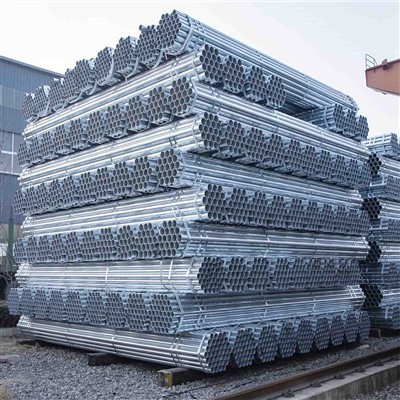
Tianjin Lefin Industrial Co., Ltd is one of the most experienced manufacturers and suppliers of detailed explanation of pile-driving straight seam steel pipes in China. Please feel free to buy high quality detailed explanation of pile-driving straight seam steel pipes from our factory. Good service and reasonable price are available.
Detailed Explanation of Pile-Driving Straight Seam Steel Pipes
Pile-driving straight seam steel pipes are the core category of welding steel pipes for piles. They refer to hollow section steel pipe components with weld seams parallel to the longitudinal axis of the steel pipe, specifically used in foundation pile foundation projects. They are the mainstream materials for steel pipe piles and casing pipes in modern geotechnical engineering. According to manufacturing processes, they can be divided into two major categories: "Straight Seam Submerged Arc Welding Steel Pipes (LSAW, the absolute main force for large-diameter thick-walled piles, accounting for over 70% of the high-end pile pipe market)" and "Straight Seam High Frequency Resistance Welding Steel Pipes (ERW/HFW, medium and small-diameter economical pile pipes)". The two have clear divisions in terms of performance, specifications, and applicable scenarios.
I. Core Application Scenarios and Engineering Functions
The core function of the pile straight seam steel pipe is to bear vertical loads, transfer the forces from the upper structure to the deep stable soil layer, and also bear lateral soil pressure, water pressure and horizontal loads. It is mainly applied in four engineering fields:
- Super high-rise and heavy-duty building pile foundations: Core columns of super high-rise office buildings and large venues, replacing traditional concrete piles, significantly shortening the pile length and construction period.
- Bridges and transportation pile foundations: Bridge piers of cross-river and cross-sea bridges, high-arched railway viaducts. Thick-walled LSAW pipes can withstand dynamic loads and bending moments, suitable for deep water and soft soil conditions.
- Marine and wind power engineering: Single pile foundations for offshore wind power, piers for docks, cross-sea cofferdams. It needs to consider vertical bearing capacity and seawater corrosion, wave impact loads, and is the preferred process for marine pile pipes.
- Municipal and support engineering: Foundation support bored piles, anti-floating piles, steel casing for cast-in-place piles. ERW pipes are mostly used for shallow foundation pits and temporary support, while LSAW pipes are used for permanent structures in deep foundation pits.
There are two forms of application in the project:
- End-bearing/friction steel piles: The steel pipes are directly driven into the soil layer, relying on the end resistance and side friction of the piles to bear the load. They can also be filled with concrete internally to further enhance the bearing capacity;
- Grouting pile casing: The steel pipes serve as temporary or permanent protective walls. Internal drilling is carried out and concrete is poured to prevent hole collapse, and they are suitable for loose and water-rich soil layers.

II. Main Production Processes and Detailed Process Overview
3.1 Spiral Seam Submerged Arc Welded Steel Pipe (LSAW) - JCOE Process (Main Process for Large-Diameter Thick-Walled Piles)
The JCOE process is the most commonly used forming process for thick-walled spiral seam pipes used for piling. A single sheet of steel is press-formed step by step, suitable for all specifications of pile pipes with a wall thickness of 12 to 80 mm and a diameter of 400 to 3200 mm. The entire process consists of 16 core procedures:
1. Raw material inspection at the factory:
The raw materials used are hot-rolled controlled-rolling and controlled-cooling (TMCP) steel plates, with the main materials being Q355B/C/D, Q390, S355JR, etc. low-alloy high-strength steels. Before entering the factory, 100% ultrasonic testing is conducted to check for internal layering and slag defects in the steel plates. At the same time, the chemical composition, mechanical properties, and dimensional deviations are verified.
2. Edge milling processing:
The edges of the steel plates are precisely milled using a milling machine to correct the width deviation. At the same time, welding grooves (usually X-shaped or V-shaped) are processed to ensure the penetration and weld seam formation quality for subsequent welding.
3. Edge pre-bending:
The edges of the steel plates are pre-bent to the target curvature using a roller or mold pre-bending machine to avoid "pear-shaped tip" defects in the pipe body after forming and to ensure that the weld seam area has a qualified roundness, reducing the forming rebound.
4. JCO step-by-step forming:
(The steel plates enter the gantry press machine and are gradually formed in three steps)
- The first step presses one side of the steel plate into a J shape;
- The second step presses the other side into a C shape symmetrically;
- Finally, the seams are joined to form an open O-shaped pipe billet.This process is flexible and can quickly switch specifications, adapting to multi-batch and small-batch customized orders for pile foundations.
5. Pre-welding positioning
Gas metal arc welding (GMAW) is used to conduct continuous spot welding at the seam of the open pipe billet to fix it, ensuring the roundness of the pipe billet and uniform weld gap, and preventing misalignment and burn-through during the main welding process.
6. Double-sided submerged arc main welding
This is the core process that determines the weld strength. It adopts the internal welding + external welding dual-position multi-wire submerged arc welding process:
- Internal welding is usually 4-wire series submerged arc welding, and external welding is 3-wire parallel. The welding speed is 1.2-1.8m/min, and the heat input is precisely controlled at 18-25kJ/cm;
- The welding agent covers the arc to isolate the air, ensuring uniform weld penetration depth and dense structure, and the final weld tensile strength is not lower than the base material itself.
7. First round non-destructive testing
100% ultrasonic testing (UT) + X-ray industrial television inspection is conducted immediately after welding to check for internal defects such as pores, slag inclusions, incomplete fusion, and incomplete penetration. Unqualified pipe bodies are directly repaired or scrapped.
8. Mechanical expansion
The entire steel pipe is mechanically expanded throughout its length, which is a key process that distinguishes LSAW pile pipes from other welded pipes:
- The expansion head radially expands the pipe body, with the deformation usually being 0.8%-1.5%;
- The purpose is to eliminate welding residual stress, evenly distribute the pipe body stress, and significantly improve dimensional accuracy. The ellipticity deviation can be controlled within ±1.5mm, ensuring coaxiality during pile driving connection.
9. Hydraulic test
A static water pressure test is conducted for each pipe, with the test pressure set according to standards and design requirements. The holding pressure time is not less than 10 seconds to verify the overall sealing performance and pressure-bearing capacity of the pipe body. The equipment automatically records the pressure curve and archives it.
10. Pipe end processing and final inspection
The pipe ends are chamfered and flattened for standard welding grooves processing. Then, the second round of ultrasonic + X-ray re-inspection is completed, combined with pipe end magnetic particle testing, to check for secondary defects that may occur in the expansion and water pressure processes.
11. Corrosion protection and finished product delivery
Corrosion protection is carried out according to engineering requirements (ordinary epoxy, 3PE heavy-duty corrosion protection, marine engineering corrosion coating), and then the pipe is marked, weighed, and a quality certificate is issued before delivery.
3.2 Continuous Forming Process for Straight Seam High Frequency Resistance Welded Steel Pipes (ERW/HFW)
This process is mainly used for small and medium-sized diameter economical pipe sections with a diameter of ≤ 600mm and a wall thickness of ≤ 16mm. It uses hot-rolled steel strips as raw materials and is produced continuously, featuring high efficiency and low cost:
- After the steel strip is unwound, straightened, and edge-cut, it is continuously rolled into a round pipe billet by multiple sets of rollers;
- Utilizing the skin effect of the high-frequency induction current, the edge of the pipe billet is instantly heated to a molten state, and solid-phase welding is achieved through the pressure of the extrusion rollers without filler metal;
- The burrs on the inner and outer weld seams are scraped off online, and the weld seams undergo medium-frequency hot tempering for medium-frequency heating treatment to refine the grains and eliminate the brittle welding structure;
- The pipe is straightened and corrected according to the diameter, cut to a fixed length by a flying saw, undergoes water pressure testing and eddy current inspection, and then is stored in the warehouse.
III. Core Performance and Technical Characteristics
Compared with spiral seam welded pipes and seamless steel pipe piles, the driven straight seam steel pipe (especially LSAW process) possesses irreplaceable technical advantages:
1. High weld reliability
The length of the straight seam weld is much shorter than that of the same specification spiral seam pipes, and the total probability of welding defects is lower; the weld is distributed longitudinally along the pipe body, which provides a better stress state when the pile foundation is subjected to axial compression and bending, without the shear stress superposition effect of spiral welds, and has better resistance to hammering impact.
2. Excellent dimensional accuracy and roundness
After mechanical expansion of LSAW pipes, the outer diameter deviation, ellipticity, and straightness are significantly better than those of spiral welded pipes. The joint misalignment at the pipe ends is small, and the on-site pile connection construction efficiency is high. During the pile driving process, the pile body is less likely to bend due to poor coaxiality.
3. The thick-walled structure is highly compatible with high-strength steel.
It can produce high-strength thick-walled pipes with a wall thickness of over 80mm and a steel grade of S460ML/X80. These pipes are suitable for scenarios with extremely heavy loads such as ultra-deep foundation piles and marine engineering. This is something that ERW pipes, spiral pipes, and most seamless pipes cannot achieve.
4. Low residual stress, excellent fatigue resistance
The expansion process can eliminate over 80% of the welding residual stress. The stress distribution of the pipe body is uniform, and it has stronger anti-fatigue cracking ability under long-term dynamic loading and reciprocating loads. It is suitable for dynamic load pile foundations such as bridges and wind power.
5. Outstanding overall cost-effectiveness
Under the same load-bearing capacity, the cost is 30% to 50% lower than that of seamless steel pipes; under the same specifications, its performance is superior to spiral seam pipes, with only a slightly higher unit price. In high-end pile foundation projects, its overall benefits are the best.

IV. Professional Technical Requirements and Execution Standards
The pile-driven straight seam steel pipe has clear industry and national standards. The key control dimensions are as follows:
4.1 Mainstream Execution Standards
- Domestic General Standard: SY/T 5040-2012 "Welded Steel Pipes for Piles", covering construction, municipal engineering, and ordinary bridge pile pipes;
- Specialized for Marine Engineering: GB/T 37636-2019 "Welded Steel Pipes for Marine Engineering Piles", with higher requirements for roundness, low-temperature toughness, and anti-corrosion;
- International General Standard: ASTM A252/A252M "Specification for Welded and Seamless Steel Pipe Piles", widely adopted in export projects.
4.2 Core Technical Requirements
1. Raw Materials and Chemical Composition
The raw materials are hot-rolled steel plates/steel strips. The steel types are mostly carbon structural steel (Q235B), low-alloy high-strength structural steel (Q355, Q390, S355 series). The chemical composition must comply with the corresponding base material standards. The contents of harmful elements such as phosphorus and sulfur need to be strictly controlled to ensure low-temperature toughness and weldability.
2. Dimensional and shape accuracy
- Outer diameter deviation: Generally ≤ ±0.5% of the nominal outer diameter. For offshore piles, this requirement is ≤ ±0.3%.
- Wall thickness deviation: For ordinary piles, ≤ ±12.5% of the nominal wall thickness. For thick-walled piles, the deviation can be tightened according to the agreement.
- Ellipticity: For ordinary piles, ≤ 1% of the outer diameter. For offshore engineering piles, the control accuracy is 20% higher than the conventional standard.
- Straightness: ≤ 0.1% of the pipe length, ensuring the verticality of the pile driving.
3. Mechanical performance requirements
- The transverse tensile properties of the pipe body (yield strength, tensile strength, elongation after fracture) must comply with the base material standards;
- The tensile strength of the welded joint should be ≥ the minimum value specified in the base material standard and must not be lower than the base material;
- For low-temperature environments and marine engineering, the Charpy impact test should be conducted to ensure the impact toughness at -20℃/-40℃;
- ERW steel pipes should undergo a flattening test to verify the weld plasticity and bonding strength.
4. Non-destructive Testing and Quality Control
- 100% ultrasonic testing and X-ray inspection are conducted for weld seams; defect acceptance levels are carried out in accordance with standards;
- Magnetic particle testing must be performed at the pipe ends to detect surface opening defects and prevent cracking at the pipe ends during piling;
- Sequential water pressure tests are mandatory inspection items upon factory delivery; no leakage and no plastic deformation are considered as qualified.
5. Special Engineering Supplementary Requirements
- Oceanic Pile Foundations: Additional requirements include enhanced anti-corrosion performance, resistance to layer tearing (Z-direction performance), and resistance to seawater impact corrosion;
- Hammering Pile Driving: The hardness of the pile tip and impact toughness need to be improved. In some cases, pile boots and pile caps should be added for reinforcement;
- Permanent Structural Piles: Additional requirements include increased fatigue performance and weld seam toughness margin. For certain projects, welding process assessment (WPS) is required.

Hot Tags: detailed explanation of pile-driving straight seam steel pipes, China, suppliers, manufacturers, factory, price, 600 600mm Square Pipe, ASTM A53 GR B TUBE, ASTMA501 Hot Formed Seamless Hollow Section, EN 10219 Cold Formed Hollow Section, JIS G3466 SS400 STEEL TUBE, Thailand Rectangular Pipe