


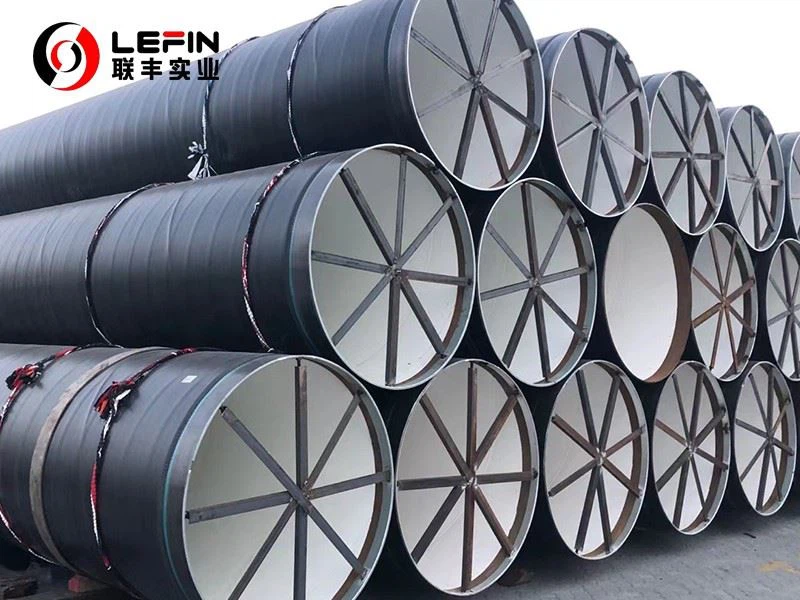
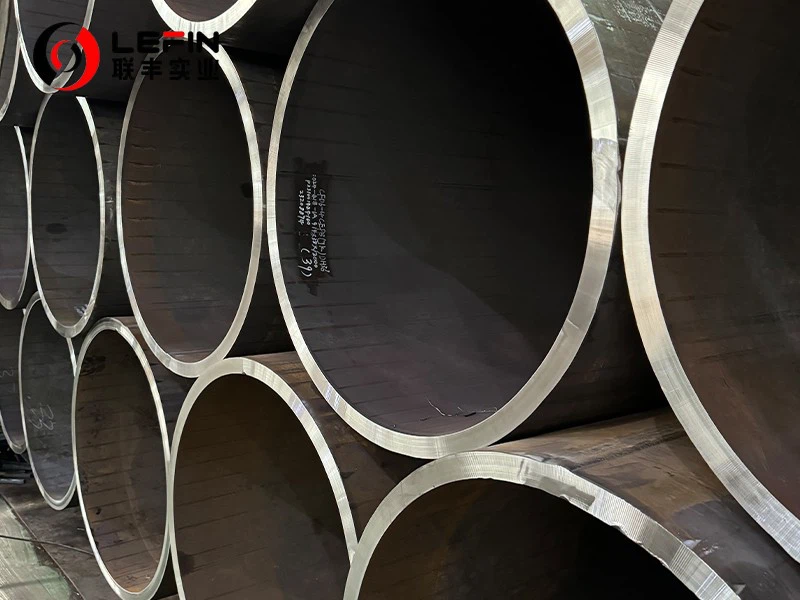
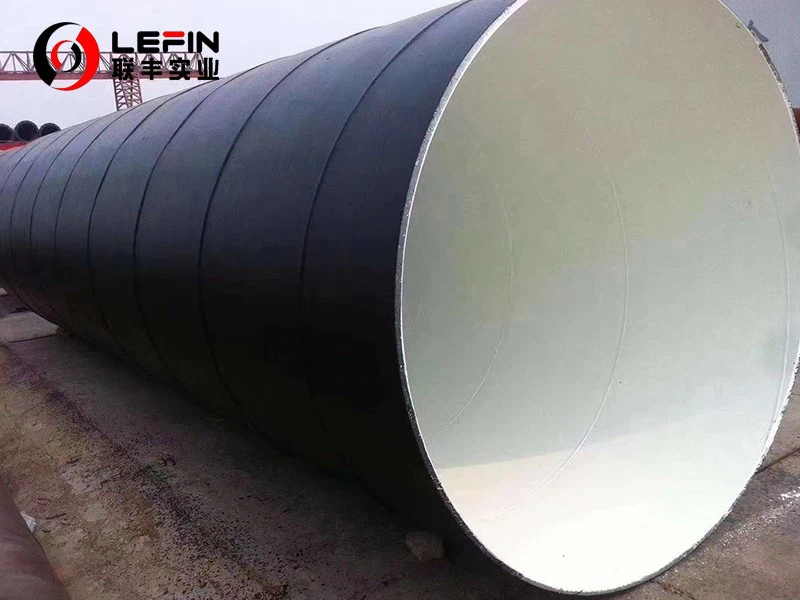

Tianjin Lefin Industrial Co., Ltd is one of the most experienced manufacturers and suppliers of analysis of factors affecting the quality of large-diameter spiral steel pipes in China. Please feel free to buy high quality analysis of factors affecting the quality of large-diameter spiral steel pipes from our factory. Good service and reasonable price are available.
Analysis of Factors Affecting the Quality of Large-Diameter Spiral Steel Pipes:
The core quality of large-diameter spiral steel pipes (with a diameter generally ≥ 219mm, being the main material used in water supply and drainage, municipal pipelines, pile foundations, long-distance oil and gas pipelines, and chemical pipelines) lies in: geometric dimension accuracy, weld quality, base material performance, anti-corrosion layer quality, inner and outer surface quality, pressure-bearing and explosion-proof performance, corrosion resistance performance.
All quality issues are concentrated in eight dimensions: raw materials, production processes, equipment and tooling, welding processes, forming parameters, subsequent treatment, detection control, and storage and transportation. Below, each item will be deeply analyzed one by one.
I. Raw Material Factors (Quality Foundation, Source Determines Lower Limit)
1. Base Material of Steel Strip and Its Grade
- Incompatible Materials: Mixing of Q235B, Q355B/C, L245, L360 and other grades, failing to meet the requirements for yield strength, tensile strength, and low-temperature impact energy. There is a significant risk of pressure-bearing failure and low-temperature cracking in the later stage.
- Quality of Steel Billet Smelting: High amount of inclusions, severe segregation, coarse grains, and excessive sulfur and phosphorus content can cause delamination, cracks, and stamping cracking of the steel strip. The formed pipe body will have inherent defects.
- Excessive Low-Carbon Equivalent: Imbalance in the ratios of carbon, manganese, silicon, sulfur, and phosphorus can reduce weldability. Spiral weld seams are prone to porosity, cracks, and incomplete fusion.
2. Steel strip specifications and plate shape
- Excessive thickness tolerance: The thickness of the steel strip is uneven. After forming, the deviation of the pipe wall thickness and the ellipticity exceed the standard, resulting in stress concentration during pressure application.
- Sickle bends, wave bends, and edge burrs on the steel strip: Directly cause misalignment during forming, overlapping edges, non-round pipe openings, and weld misalignment.
- Surface defects of the steel strip: Rust pits, scratches, indentations, and interlayers. These defects remain on both the inner and outer surfaces of the pipe after forming, becoming the starting points of corrosion and stress weak points.
3. Welding material compatibility
If the welding wire, welding flux grade and base material do not match, it will result in the weld strength being lower than that of the base material, insufficient impact toughness, poor corrosion resistance, and the weld seams are prone to cracking after pipeline pressure testing and ground subsidence.

II. Forming Process and Equipment Tools (Determining Geometric Dimensions and Structural Stress of the Tube Body)
1. Setting of Forming Machine Parameters
The core parameters of the forming unit are the forming angle, feeding speed, and roller compression amount
- Deviation of the forming angle: This directly affects the pitch and weld gap. Excessive or insufficient angle will result in uneven weld width, misalignment, excessive or insufficient gap.
- Inappropriate forming roller pressure: Insufficient pressure leads to poor adhesion and poor tube roundness; excessive pressure causes cold work hardening and internal residual stress, resulting in natural deformation and cracking in the later stage.
- Improper adjustment of straightening rollers and vertical rollers: The steel strip runs off center, causing unilateral misalignment, unequal tube diameters at the ends, and tube body bending.
2. Equipment Accuracy and Wear
- The forming rolls, guiding rolls, and pressing rolls are severely worn, with coaxiality deviations. The steel belt operates with jitter, resulting in poor forming stability, and the pipe diameter, roundness, and straightness exceed the tolerance limits.
- The rigidity of the machine frame is insufficient. When producing large-diameter thick-walled pipes, the machine frame undergoes slight deformation, leading to poor consistency in the geometric dimensions of the entire batch of pipes.
3. Quality of head-to-head steel band connection
The welds at the front and rear steel bands did not penetrate completely, there were slag inclusions and misalignment. After entering the spiral forming process, the connection defects extended to the pipe body, posing a major quality hazard.
III. Welding Process (The most critical step in the production of spiral tubes, and the weld seam is the area with the highest failure rate)
For large-diameter spiral tubes, submerged arc automatic welding is commonly used, with both the inner and outer surfaces being welded on both sides. Welding is the core control point for quality.
1. Welding parameters
Imbalance in the matching of welding current, voltage, and welding speed:
- Insufficient current: shallow penetration, incomplete fusion, incomplete penetration;
- Excessive current: weld seam burning through, coarse grains, brittle heat affected zone, formation of crystalline cracks;
- Too fast welding speed: gases cannot escape in time, resulting in pores and slag inclusion; too slow welding speed leads to large deformation and high residual stress.
2. Weld Gap and Misalignment
- Excessive overlap and gap at the steel strip edges: post-weld slagging and collapse;
- Excessive misalignment: unilateral wall thickness reduction, stress concentration during pressure application, and it is highly likely to crack at the misaligned area.
3. Welding Environment and Process Control
- Humidity, rain, oil stains, rust, moisture on the steel strip edge: During welding, hydrogen is decomposed, resulting in hydrogen-induced cracks and pores;
- Insufficient drying of the welding flux, or moisture absorption: Directly causes weld porosity and slag inclusion;
- Inconsistent welding on the inside and outside, or deviation of the welding gun: Weld seam becomes arc-biased and single-side fusion is poor.
4. Control of Heat-Affected Zone
If the welding heat input is too high, the heat-affected zone will expand, the grain size will become coarse, the impact toughness will significantly decrease, and the structure is prone to cracking in low-temperature environments and during ground subsidence.

IV. Cutting, Pipe Mouth Processing Quality
1. Sawing accuracy: Wear of the saw blade, unstable feed, resulting in burrs at the pipe mouth, uneven bevels, and inclined end faces. This leads to misalignment during subsequent connection and poor sealing.
2. Pipe mouth bevel processing: For anti-corrosion and connection, standard bevels are required. Inconsistent bevel angles and backing edge dimensions lead to poor quality of on-site welding interfaces and significant leakage risks.
3. Straightness of pipe body fixed length: Inadequate straightening results in pipe bending and excessive deflection. This makes pipe laying unable to align properly and causes abnormal stress.
V. Post-processing and Residual Stress in Heat Treatment
1. Forming and Stretching: For large-diameter pipes, mechanical stretching is commonly used to round them. Inappropriate stretching amounts can cause the pipe wall to stretch and thin, resulting in internal stress; without stretching, the roundness and ellipticity will not meet the standards.
2. Stress Relief Treatment: Thick-walled, high-quality spiral pipes have large welding residual stresses. Without performing aging/stress relief treatment, they will deform naturally during storage and after underground burial, and micro-cracks will expand.
3. Repair Process: When repairing defects, random welding or multi-layer welding is not standardized. The welding area deteriorates in material quality and stress concentration occurs, becoming a weak point.
VI. Quality of Anti-corrosion Treatment (Determining Service Life, Core Indicator for Underground Pipes)
90% or more of the large-diameter spiral steel pipes are used for underground water supply and drainage, oil and gas, and municipal projects. Failure of the anti-corrosion layer = complete pipe scrapping.
1. Surface rust removal grade: If the sandblasting/shot blasting rust removal does not reach Sa2.5 level, there will be residual oxide scale and rust, poor adhesion of the anti-corrosion layer, and peeling, delamination, corrosion perforation in the later stage.
2. Quality of anti-corrosion materials: Inferior raw materials for 3PE, 2PE, epoxy coal tar pitch, cement mortar lining, etc., poor aging resistance and cathodic stripping performance.
3. Anti-corrosion construction process: Uneven coating thickness, missed coating, hollowing at weld seams, insufficient wrapping and overlapping width; Hollowing, cracking, and sanding of the cement mortar lining.
4. Temperature environment: Low temperature, high humidity, rainy days during anti-corrosion construction, poor coating curing, significant drop in adhesion force.
VII. Quality Inspection and Process Control (Human Factors and Management Factors)
1. Lack of Non-destructive Testing: No X-ray, ultrasonic UT, or magnetic particle MT tests were conducted. Internal defects such as cracks, incomplete welding, and slag inclusions were not detected. There were hidden problems at the time of delivery.
2. Non-compliance with Pressure Test Standards: No individual pressure tests were performed according to national standards. The pressure holding time was insufficient, and the pressure-bearing capacity could not be verified.
3. Lack of Process Inspection: There was no first-piece inspection or process sampling for forming, welding, and anti-corrosion. Parameters were adjusted randomly, and batch quality fluctuated greatly.
4. Inadequate Control of Dimension Tolerances: No individual tests were conducted for pipe diameter, wall thickness, ellipticity, straightness, and pitch. Inferior products were released into the market.

VIII. Storage, Lifting and Transportation (Post-Installation Human Damage)
1. Improper Storage: No wooden pads at the bottom, excessive stacking, mixing of different specifications, flattening and deformation of the pipe body, and damage to the pipe opening.
2. Rough Lifting Operations: Directly using steel wire ropes to clamp the pipe, unreasonable lifting points, causing deformation of the pipe body, damage to the anti-corrosion layer, and cracking of the pipe opening.
3. Insufficient Transportation Protection: No rubber pads, no isolation between pipes, resulting in anti-corrosion scratches, deformation of the pipe opening, and bending of the pipe body during transportation.
Summary: Core Quality Weight Ranking
1. Raw material base material + welding material (foundation)
2. Submerged arc welding process and weld quality (critical failure point)
3. Forming parameters, equipment accuracy, geometric dimensions (installation compatibility)
4. Anti-corrosion layer construction and rust removal quality (service life)
5. Inspection control, finishing, hoisting and storage (post-installation support)
Hot Tags: analysis of factors affecting the quality of large-diameter spiral steel pipes, China, suppliers, manufacturers, factory, price, ASTM A500 GR B STEEL TUBE, HOT FORMED STEEL PIPE, HOT TREATMENT EN10210 SQUARE HOLLOW SECTION, AS1163 Square Hollow Section, ASTM A500 STEEL HOLLOW SECTION, Square And Rectangular Steel Pipe


